


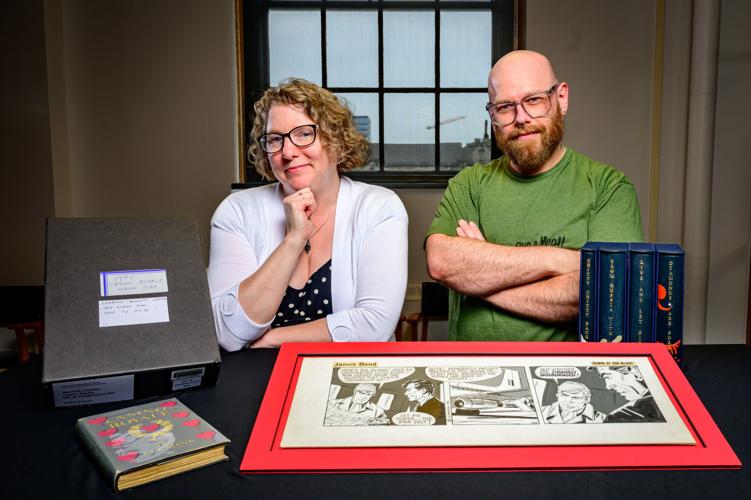

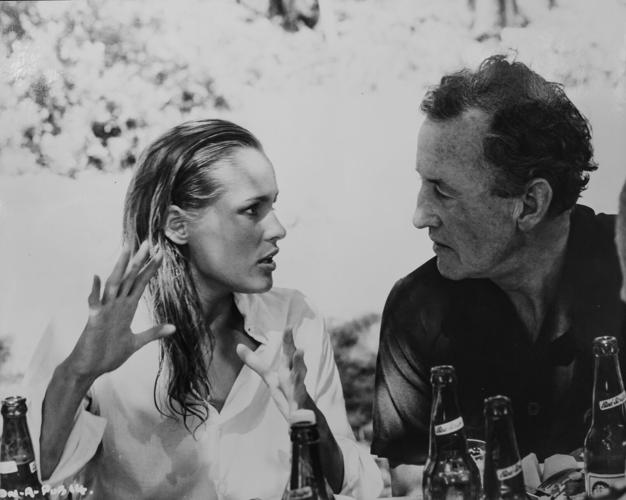
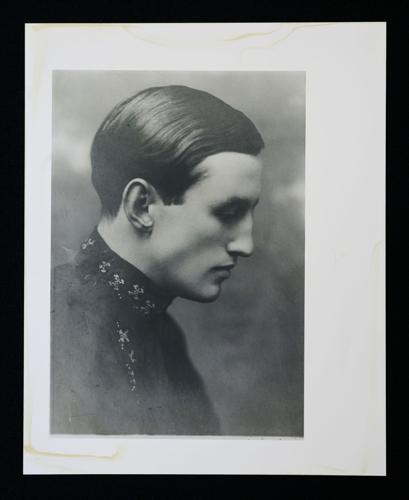
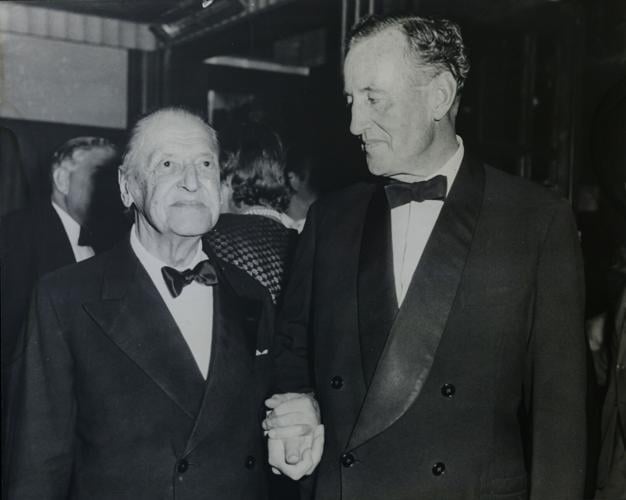

CHAMPAIGN, Ill. — The shelves of the Rare Book and Manuscript Library at the University of Illinois Urbana-Champaign contain a treasure trove of materials related to author Ian Fleming, who created the fictional spy James Bond. Tales of the dashing 007 and his dangerous world of villains, gadgets, gambling and women sit alongside original manuscripts with notes and edits, and correspondence between Fleming and his friends, typists, editors and agents.
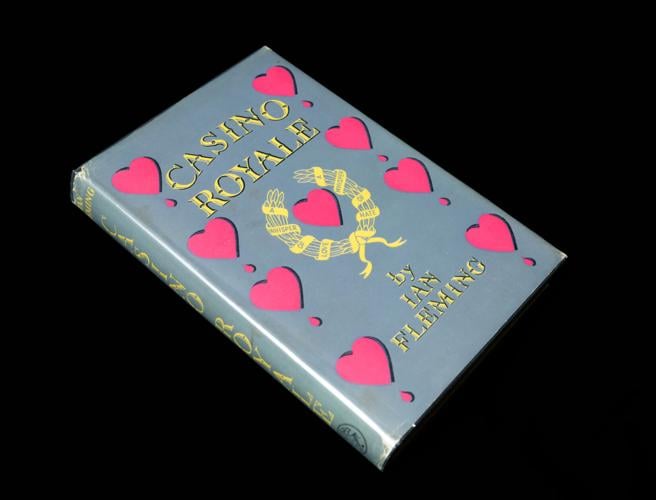
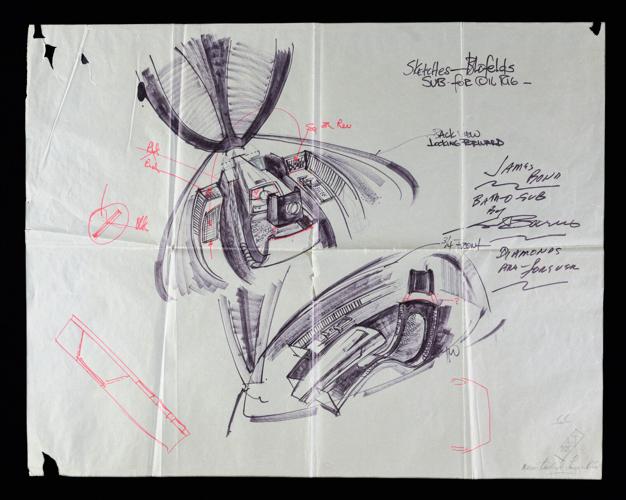
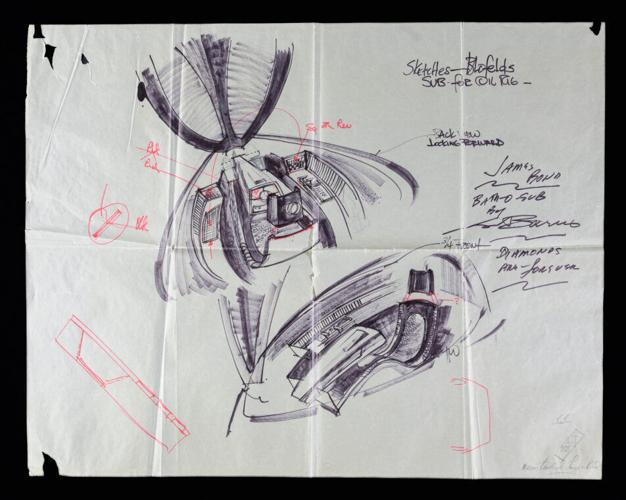
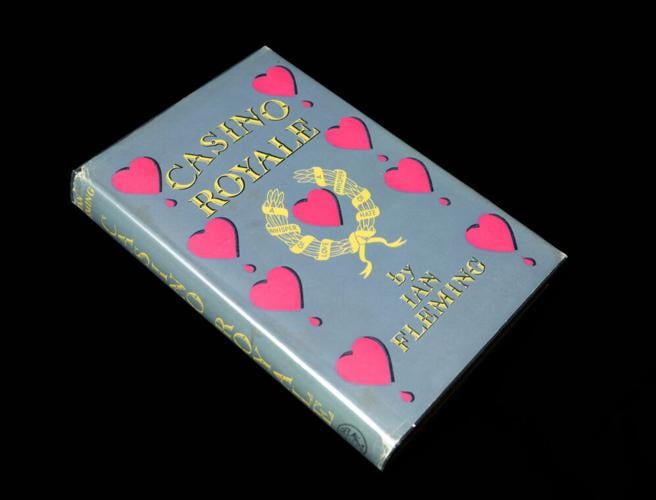
The Michael L. VanBlaricum Ian Fleming and Bondiana Collection includes first editions of all of Fleming’s novels, artwork, research materials related to Fleming and many one-of-a-kind items. They were donated by Illinois engineering alumnus Michael VanBlaricum, who, with his wife Pam, has supported the University Library, The Grainger College of Engineering, Spurlock Museum of World Cultures, Lyric Theatre@Illinois and the U. of I. Foundation.
People are also reading…
VanBlaricum has been donating items from his vast collection to the library since December 2012, with 1,645 items donated so far. Until recently, many of the materials had not yet been catalogued and therefore were unavailable to researchers or the public.
Yusuf Hermes is a graduate student worker who is the dedicated cataloguer for the collection, as well as a Bond fan. Over the last two years, working with RBML cataloging coordinator Chloe Ottenhoff, Hermes has been able to eliminate much of the backlog. They’ve now catalogued material donated through 2024, beginning with unpublished archival material, such as manuscripts and correspondence.
VanBlaricum’s donated materials included “next-level documentation,” Hermes said.
“When we created records for these items, it’s a combination of his knowledge and the research he’s provided us with, sometimes information from who he obtained the material from, as well as my own research,” Hermes said.
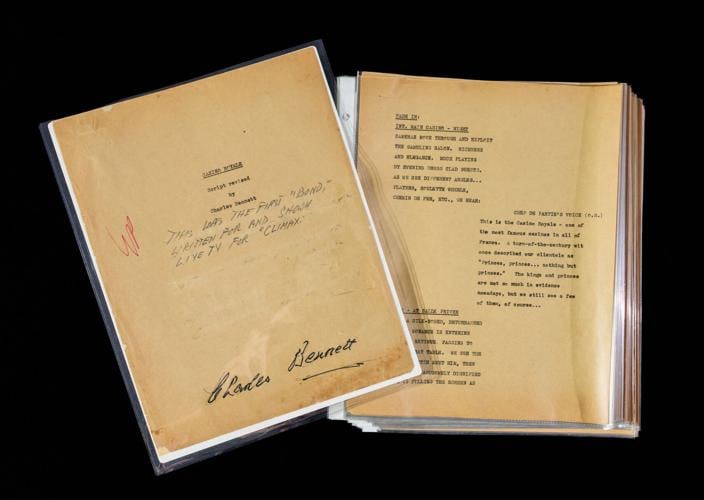
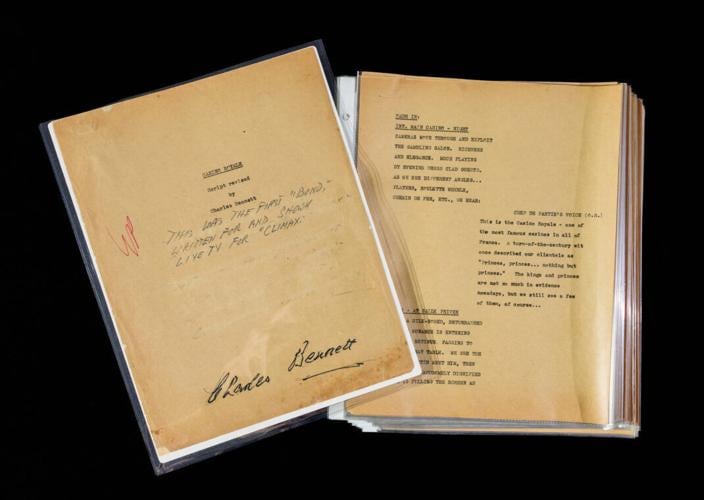
The first item they cataloged was the original TV script for “Casino Royale.” The novel was first adapted in 1954 for an American TV series, featuring an American Bond known as “Jimmy.” It was the first onscreen appearance of Bond, and the script is the only known copy in existence and one of VanBlaricum’s favorite items.
VanBlaricum became a Bond fan after seeing “Goldfinger” at age 14. As an adult, he decided to read all of Fleming’s novels but couldn’t find many of them. His wife bought him three first editions, one of which had been owned by Sammy Davis Jr., that she found in a New York City bookshop. His “collector’s gene” was triggered, and he set out to obtain all the British first editions of the novels, and then the American first editions. Eventually, he mortgaged his house to buy the collection of a Liverpool book dealer that included some rare items, making VanBlaricum one of the world’s major collectors of Ian Fleming material.
“When I started collecting in the 1980s, I was one of the few collectors buying Ian Fleming and James Bond items, which were not very expensive then,” VanBlaricum said. “There are a lot of things in the collection worth a lot of money, but because I was the only person buying them back in the ‘80s and ‘90s, I got them for a song.”
Highlights from the Ian Fleming and Bondiana Collection
- The only known original typescript of Fleming’s earliest short story, “A Poor Man Escapes,” from 1927.
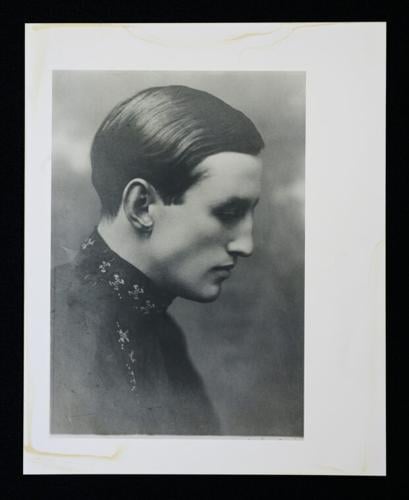
- Correspondence between Fleming and Clare Blanchard. Blanchard worked in British naval intelligence and as a correspondent for a newspaper where Fleming was head of foreign news. The character Moneypenny from the Bond books is partially based on Blanchard. “The witty repartee between the two is fun to read,” Hermes said. “She was his close confidante, proofreader and girlfriend. She was very important and key in his life.”
- Correspondence between Blanchard and Raymond Benson, a Bond expert who wrote the first definitive guide to the Bond phenomenon, encompassing both the novels and the films, and later was a continuation author of Bond books. The research materials that belonged to Benson are a thorough collection of interviews, correspondence, promotional materials and original artwork, Hermes said. “He interviewed and corresponded with every person imaginable that was impactful on Fleming’s life and work,” they said.
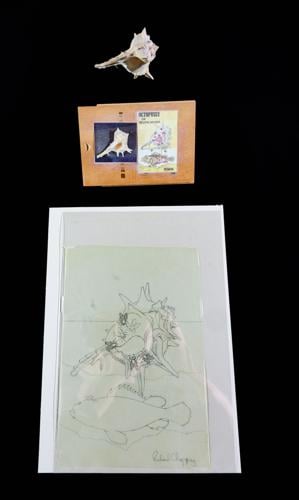
- Original pencil sketches and color proofs for the dust jackets for “Octopussy” and “Living Daylights” by artist Richard Chopping, who created the art for the dust jacket covers for nine of Fleming’s novels. The collection also includes the shell he used as a model for the cover art.
- Typescript for “Colonel Sun,” the first Bond continuation novel published after Fleming’s death, written by Kingsley Amis under a pen name. The novel was commissioned by Fleming’s estate and was never adapted into a movie, but elements of the story were used in other Bond films.
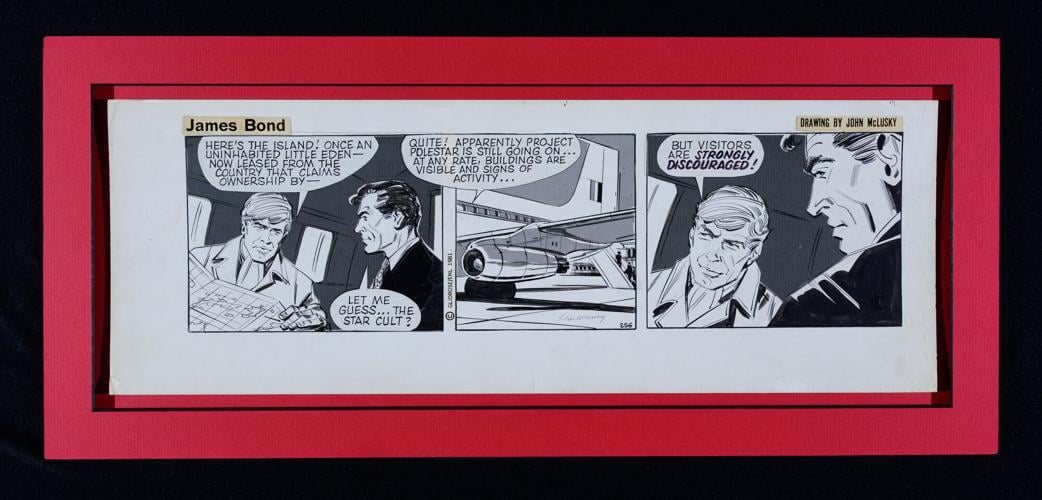
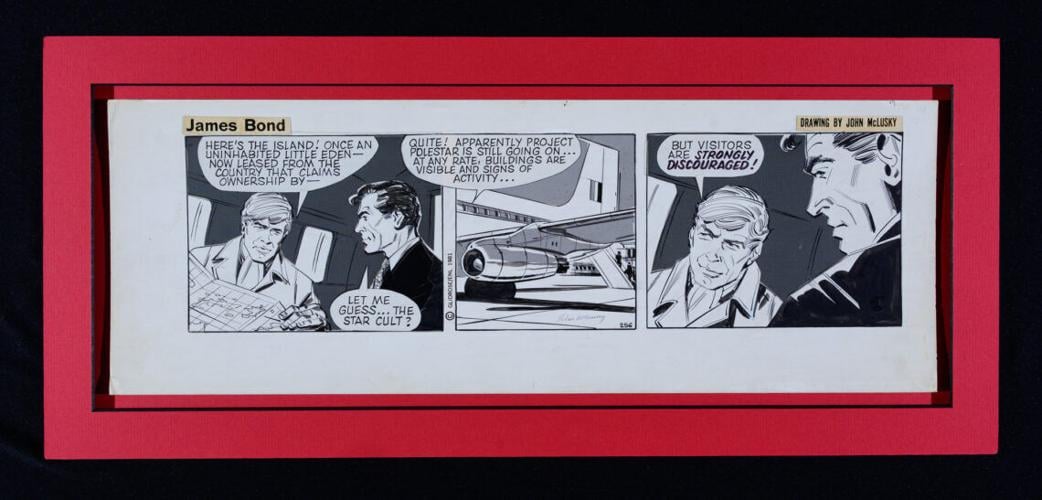
- A panel of a James Bond comic strip, signed by artist John McLusky.
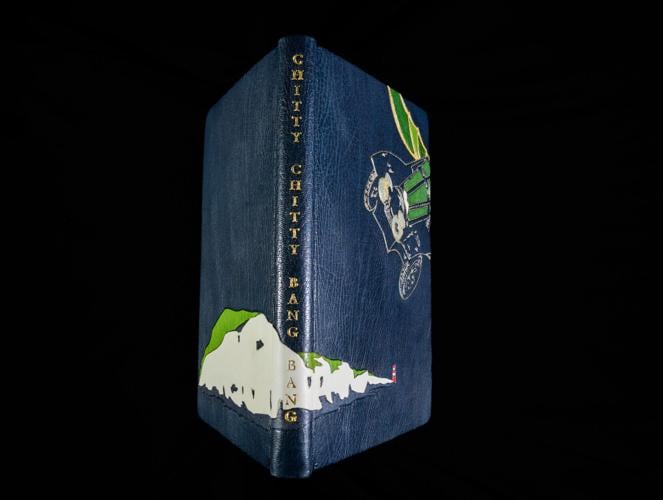
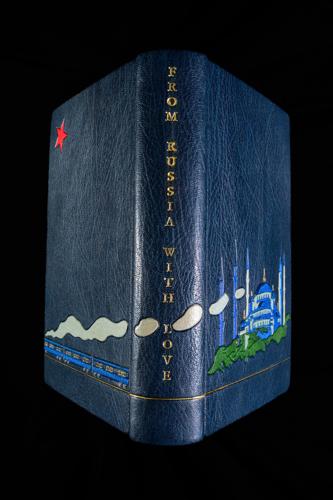
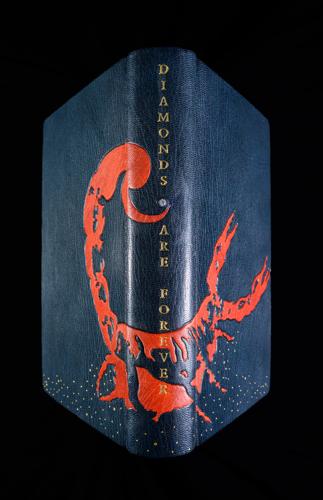
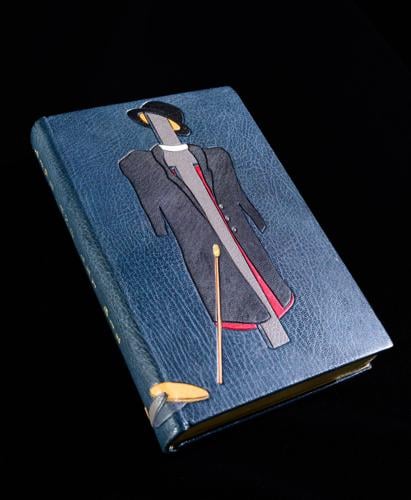
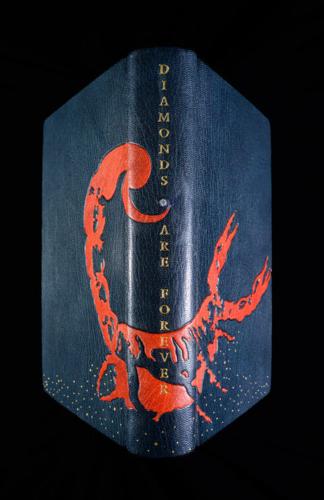
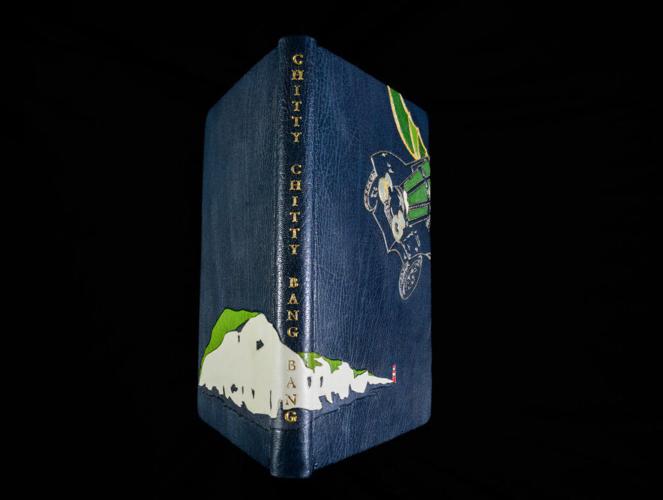
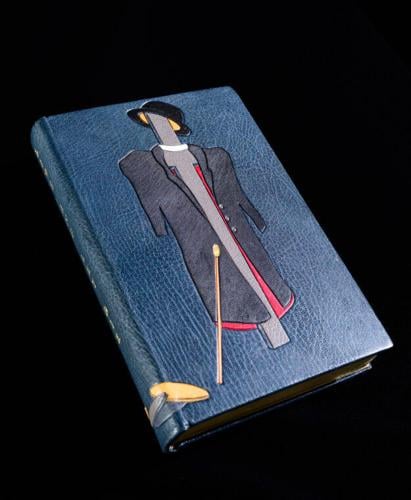
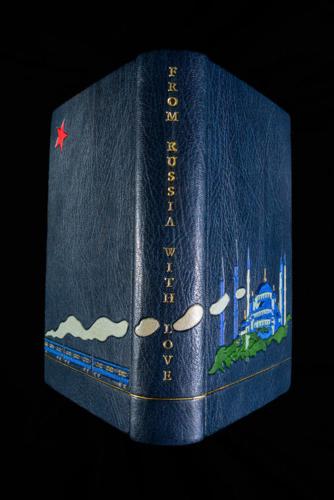
- An 18-volume set of Fleming’s novels, released in 2008 for the centenary of Fleming’s birth. The set features ornate bindings with elements from each story in the covers’ designs. “Diamonds are Forever” features a scorpion design, a small inlaid diamond and gilt grains of sand. “From Russia With Love” has a blue mosque, a red star and the Orient Express, its steam trailing across the book’s cover. The non-James Bond children’s book “Chitty Chitty Bang Bang” has a flying car, white cliffs and a lighthouse on its cover.
- Correspondence between Fleming’s secretaries and his favorite typist, Jean Frampton.
VanBlaricum said he built his collection as a research collection, and he wanted to keep it together and donate it to a library.
“Since the Illinois library is one of the largest in the U.S. and Illinois is a major research institution, it was a no-brainer as to where to donate it. The fact that among my wife, myself, my brother and our two daughters we have 12 degrees from Illinois certainly swayed the equation a bit,” he said.
The collection is of interest to scholars from many disciplines who study mid-20th-century popular culture and how it dealt with societal issues, said Lynne M. Thomas, the head of RBML.
“Because the collection is focused on pop culture in the United Kingdom, it’s a very different perspective to bring in than pop culture in the U.S.,” Thomas said. “For gender studies, it offers a very precise view of masculinity during the Cold War period that I find fascinating. It’s a really specific point of view based on Ian Fleming’s time as a member of intelligence forces in Britain during war. He’s drawing from direct experience to write these novels. A lot can be gleaned about Britain’s response to the Cold War and about international relations in a general sense.”
The materials illustrate the evolution of the films in relation to the global concerns of the times in which they were made, Hermes said. The Soviet Union is the villain in the Cold War-era films. After its collapse, the villain became drug cartels or terrorists. A trope of many Bond films is a rogue state or terrorist organization stealing nuclear warheads and holding the world ransom for a large sum of money, they said.
“The evolution is so interesting to see how it adapts to the times. There were so many points where people would say, ‘We’re going into this new decade where Bond is no longer relevant.’ Then they adapted it. They often tackle some major concern in the world at the time, such as mass surveillance,” Hermes said.
In addition to his personal collection, VanBlaricum founded The Ian Fleming Foundation, a nonprofit organization dedicated to the preservation of Ian Fleming’s legacy, which also has donated items to RBML.


