


As a child, she was not exactly devouring books under the covers with a flashlight. But there was one book she kept returning to: The Soda Pop Man, a whimsical picture book about a man, a broken-down motorbike, and a heroic goat. When she talks about it, she still laughs.
Dr. Michelle H. Martin, Ph.D. ’97, had plenty of books to choose from. Her grandmother was a kindergarten teacher and handed down the worn, dog-eared books from her classroom. Martin still has some of those books.
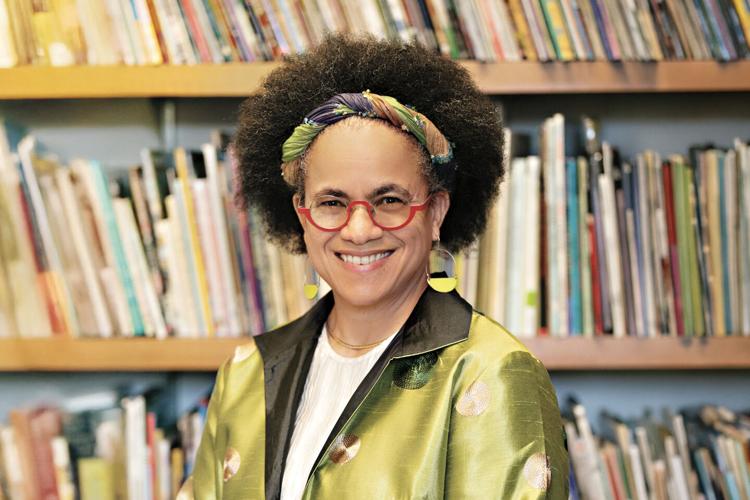
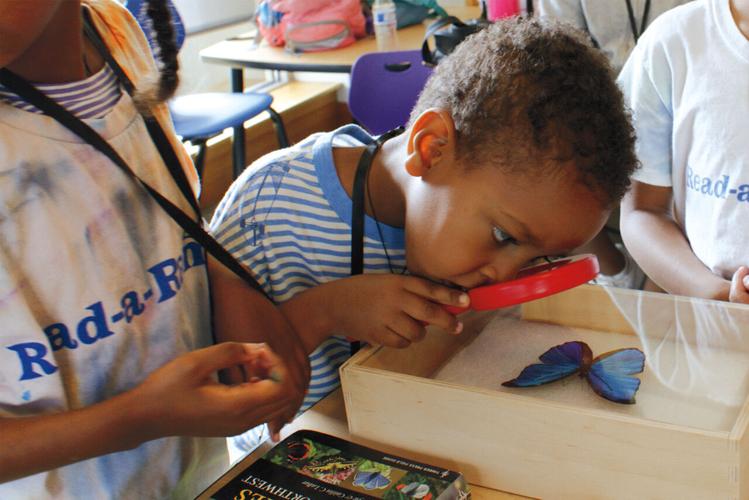
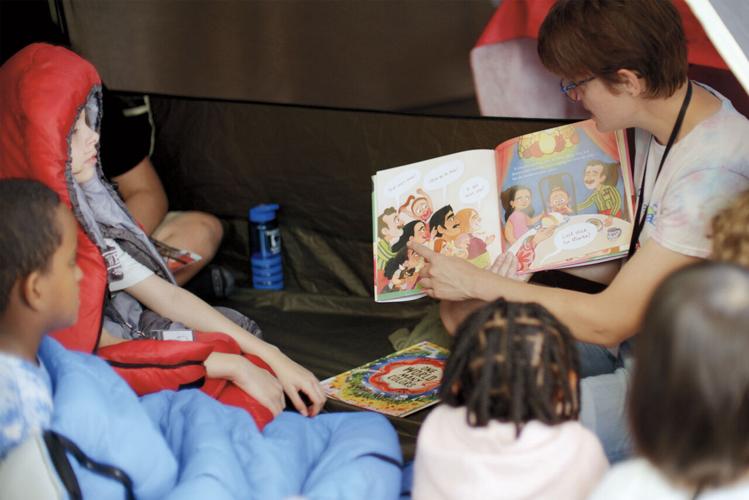
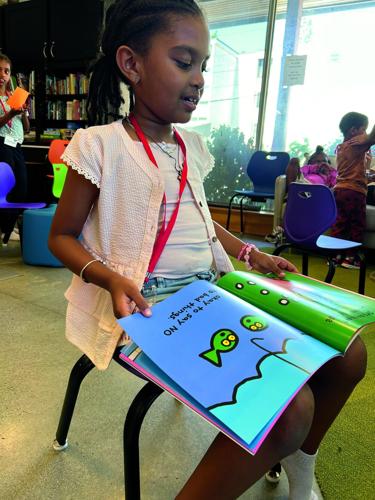
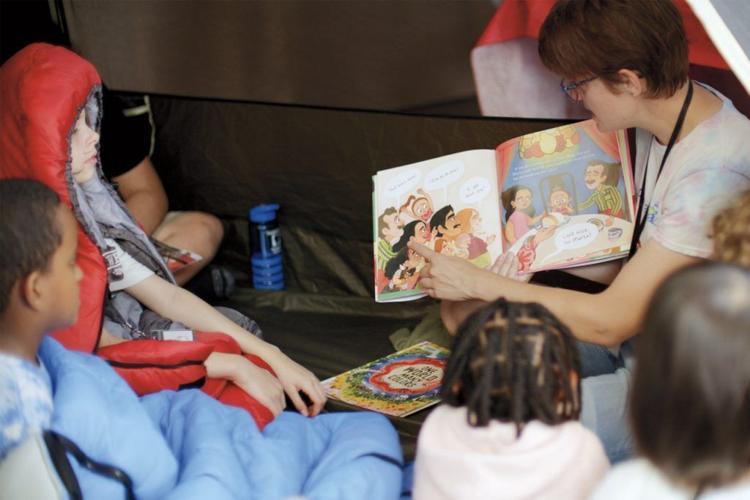
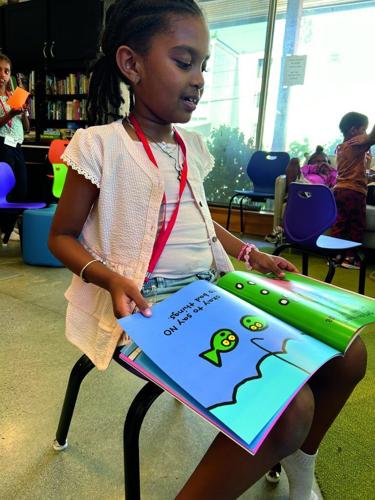
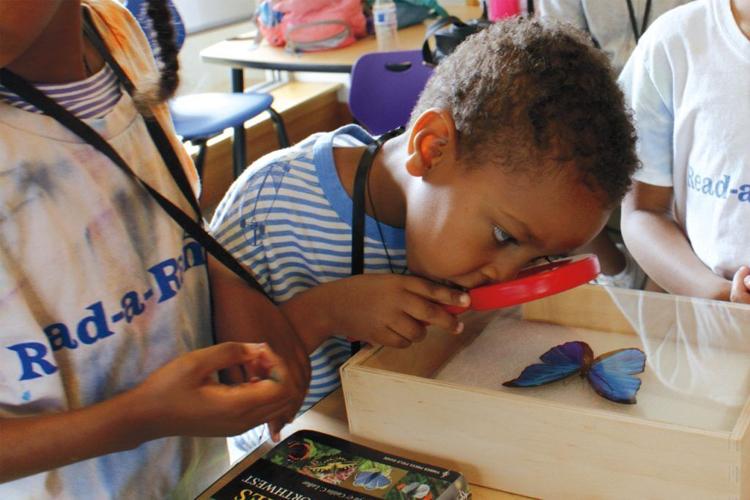
And the stories between those pages ignited her passion for literacy. Martin is a nationally recognized literacy advocate, champion of diversity in children’s literature, professor, and author. She is co-founder and executive director of Camp Read-a-Rama, a national literacy nonprofit based in Seattle that uses immersive experiences like hiking, swimming, and dancing to bring books to life, connecting children ages 4-11 to stories in unforgettable ways.
People are also reading…
Growing up in Columbia, South Carolina, Martin was surrounded by educators. Her father taught high school auto mechanics, and her mother taught middle and high school home economics. “So of course,” Martin laughed, “I said I would not be a teacher, but it was in my blood.”
Years later, her mother ran into her second grade teacher. The teacher remembered that Michelle came up to her and told her that one of her classmates could not read, but she should not worry because she would teach that child to read. And she did.
“I did not remember that, but I was really happy my favorite teacher had remembered me for service to another child,” Martin said.
That early instinct to help others discover the world through literacy became the foundation of her work, but she took an unusual path. She earned a Bachelor of Arts in English literature from the College of William and Mary and a Master of Science in outdoor teacher education from Northern Illinois University.
Martin spent five years working in outdoor education as a naturalist in California, Illinois, and South Carolina. And then she started attending children’s literature conferences. That is when she discovered the transformative power of children’s books. A turning point came in a graduate class where the professor read aloud from Tuck Everlasting. He started to cry.
“I thought, ‘Wow. If this man can cry over a children’s book, this is some powerful stuff. This is what I want to do,’” Martin said.
As she searched for a doctoral program in children’s literature, she landed on Illinois State. She arrived on campus in 1993 and completed her Ph.D. in English from Illinois State University in four years, specializing in children’s and young adult literature and composition.
She said she found a strong academic community and a mentor in Dr. Roberta Seelinger Trites, now retired.
“My ISU Ph.D. experience was quite positive,” Martin said. “Dr. Roberta Seelinger Trites was a real hands-on advisor. She gave a lot of feedback, and I learned a whole lot about writing, and how to be a successful academic—and we also sang around the piano at Roberta’s house on Friday nights. ISU gave me great academic chops, but the friendships are lifetime.”
She added that Illinois State’s children’s literature program has long been one of the best in the field.
“I have lots of successful ‘academic siblings’ teaching and researching in the field, and I hope the University continues to support the program for a long time to come,” Martin said.
Trites believes she learned just as much from her student.
“I knew Michelle Martin was a dynamo when I met her,” she said. “She proved to have a keen intellect, elegant writing style, and more focused energy than I could have hoped for. I have watched her career with pride and gratitude because she has taught me more than I ever taught her.”
Martin was named to Illinois State’s College of Arts and Sciences Hall of Fame in 2022.
In 2009, Martin taught a course on ethnic children’s literature with colleague Dr. Rachelle Washington at Clemson University in South Carolina. The campus had an outdoor lab with a cluster of cabins in the woods. Martin and Washington partnered to create a literacy camp there that would allow children to “live the story” through immersive activities.
And that is what they did, creating Camp Read-a-Rama, now a nonprofit, tying stories to outdoor activities for day campers.
“Doing a hands-on activity brings a book alive,” Martin said. “We reduce the distance between books and life. If you go for a hike, we have got a book about that. If you are dancing or cooking or swimming, there is a story to deepen the experience. We are not just developing readers; we are developing passionate, engaged readers. Anything you read, there is something you can do to deepen your engagement.”
In 2016, Martin moved to the University of Washington in Seattle, and Read-a-Rama moved with her. One of last summer’s themes was “Let’s Boogie,” which introduced campers to capoeira, ballet, and Panamanian folk dance. An educator from the Pacific Northwest Ballet visited, and campers got to dance in a capoeira studio in downtown Seattle.
“It is about doing things they are going to remember,” Martin said. “We want kids to see their everyday community as a place of wonder. A library, a studio, a college campus—these are magical places if we help them see it.”
And that magic is grounded in one guiding principle.
“From the time they walk in the door until they go home, it is 100% engagement, 100% of the time,” she said. “Dead time will kill your program. We help kids find the fun and always connect it back to the book.”
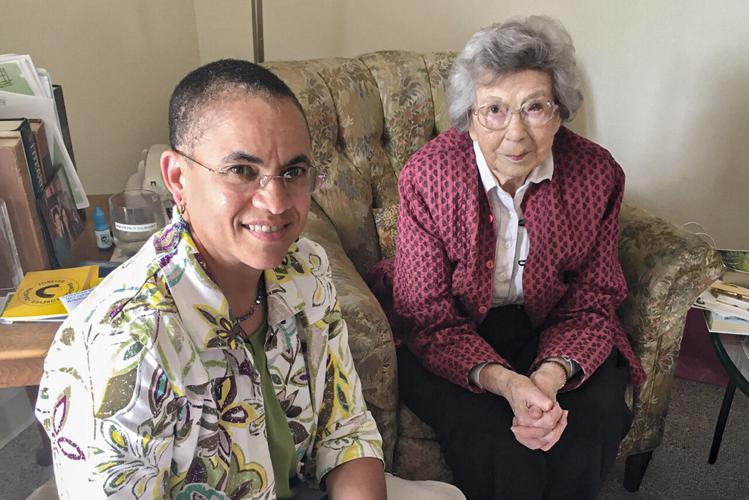
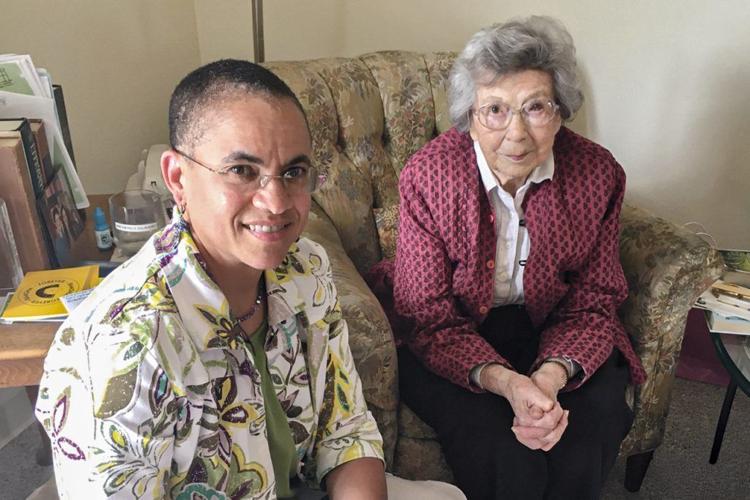
Martin became the Beverly Cleary Endowed Professor for Children and Youth Services in the Information School at the University of Washington in 2016. On her second day, she had the rare opportunity to meet the beloved children’s author, Beverly Cleary.
Flown to the author’s assisted living center in Carmel-by-the-Sea, California, she walked into the author’s room to see her seated in the well-worn wing chair, where she had written many of her books, including Ramona the Pest. Cleary was 100 at the time.
“She was still clear-eyed and funny,” Martin said. “When she was asked how it feels to be 100, she said, ‘I did not mean to do it.’”
The author lived to be 104. Her commitment to representing ordinary kids, especially those who did not always see themselves in books, is a passion that Martin shares with Cleary.
Camp Read-a-Rama recently developed an online training for librarians, teachers, and educators in community organizations. It uses children’s literature as the springboard for programming and teaches educators how to facilitate 100% engagement programming. Read-a-Rama is in its 16th year and seeks to be a national model for out-of-school literacy-rich programming.
Martin teaches graduate courses in children’s and young adult literature and youth services, educating future youth librarians and mentoring the next generation of educators. She reassures them that libraries are not going anywhere. And she is not worried about all the distractions for children who are growing up with glowing screens. Her goal is the same: to get them to fall under the “story spell.”
“Story is story, whether it is a podcast, a graphic novel, or a worn-out picture book,” she said. “If we can get kids into that spell where their mouths are open and they forget where they are, then we have done our job.”
She told a story of a 10-year-old camper who had recently moved from Mexico. Martin was taking the campers to her University of Washington office. When they stepped off the bus, this camper stared in awe and asked, “This is a school?” Martin took the campers to the center of campus and told them to turn around and look as far as they could see. “We have a mountain?” he said in disbelief.
“That boy lives up the street from where you can see Mount Rainier on any clear day, but he did not know it was there,” she said. “That is what we are doing, helping kids see the world around them.”
ISU a leader in children’s literature scholarship
Illinois State University’s children’s literature program within the Department of English Studies engages in teaching and research on children’s and young adult literature, media, and culture (CYAL). Courses focus on rigorous literary analysis of texts for young people.
Undergraduate courses include Introduction to Children’s Literature, Literature for Young Children, Literature for Middle Grades, Young Adult Literature, and Storytelling. Many undergraduate teachers-in-training take these courses to build content knowledge and explore the depths of texts for young people.
Illinois State is one of just a few graduate programs in the U.S. that offers both a Ph.D. and an M.A. with a specialization in CYAL. Dr. Mary Jeanette Moran and Dr. Jeremy Johnston teach the range of undergraduate courses along with graduate seminars.


